
Why P2P crypto trade funds get frozen, and how you can reduce the risk
Published: Last reviewed: Editorial standards
When a P2P trade in crypto is frozen, the reason is usually a link between the counterparty, or the money they sent you, and fraud or some other flagged activity. The bank or the exchange then places your account on hold while it reviews the matter. You may have committed no wrongdoing at all. In practice, a clear record of the trade, the counterparty and where your funds came from is the strongest basis for having the hold lifted.
Any question on your case may be put to us here:
Why a trade with no fault in it can still end in a freeze
In a peer to peer trade you exchange money for crypto, or crypto for money, directly with another private individual. You see only a username, yet the funds still pass through a bank or payment application that you do not control.
If an individual uses cryptocurrency derived from fraudulent activity or theft, the associated financial institution might freeze those assets. This restriction could then impact your account or any subsequent accounts that receive the moved funds.
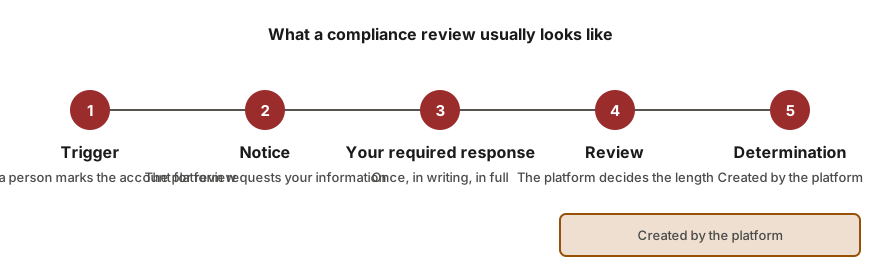
Who is involved when funds are frozen
Several parties may hold the power to restrict your funds, and each of them applies its own rules.
- Your financial institution or payment service may suspend received funds or terminate an account following a filed complaint.
- The counterparty may initiate a recall or transmit a fraud notification to your specific financial institution.
- The P2P platform holds the order, listing, and wallet in a frozen state while a dispute review is conducted.
- The crypto exchange holding the asset may restrict an account following a determination of an elevated risk flag.
- Law enforcement authorities may involve themselves if an involved victim has submitted a complaint concerning the funds.
Examination of How a Fund Freeze Appears in Practice
A recurring situation occurs when a bank account becomes restricted after receiving multiple transfers from separate individuals. The bank will then question the specific purpose of those payments and the relationship you maintain with each respective sender.
Furthermore, the P2P platform may hold the crypto in escrow because a user has opened a formal dispute. These funds typically remain locked until the platform determines its final position, and the reasons may not be fully disclosed.
Establishing Proper Documentation for a Legitimate Trade
Maintaining comprehensive records simplifies the review process for examining parties. Ensure all transaction records are preserved immediately at the time of the trade, not weeks later.
- The P2P platform order page or chat record displays the price, quantity, timestamp and the username of the counterparty.
- The bank statement entry matching the transaction, showing the payer's name exactly as recorded.
- The exchange or wallet record showing the crypto arriving or leaving.
- A copy of your identity document, plus proof that the funds were sent from a bank account held in the counterparty's own name.
- Records showing where your own funds or crypto originated before the trade, for example earlier statements or receipts.
How to reduce your risk on future transactions
Choose platforms that operate escrow and carry out identity checks, and deal with counterparties who hold a verified trading record. As a rule, accept payment only from an account held in the buyer's own name, and refuse any payment coming from third parties.
As a rule, keep your trades modest and in line with your profile, and do not split large amounts into many small ones, since that pattern attracts attention. Never give a counterparty your seed phrase, private keys or banking passwords, and do not move trade chats to unofficial channels.
Places we serve
When P2P trades lead to a freeze, we review your situation at no cost. Our role is to help you collect the records, prepare a written account of each transaction, and draft the submission for the bank, the platform or the exchange. Where a legal route exists, independent licensed lawyers are engaged to handle that part.
The bank or the platform holds the decision on any release, and no outside party can compel it. Please note that we never request seed phrases, private keys or passwords.
Frequently asked questions
Can funds received through a P2P trade still be lost?
Yes, that outcome is possible. When an incoming payment is later connected to fraud, the bank may recall the funds or place a hold, even where you had no knowledge of the issue. Keeping a clear trade history and complete records supports a showing of good faith.
Why has my bank restricted my account following P2P payments?
As a rule, banks flag accounts that receive numerous payments from unrelated individuals, or payments named in a fraud complaint. The restriction remains while the bank asks you to explain the purpose of the transfers. A written explanation supported by proof is the usual route forward.
Is P2P trading against the law?
No. In many jurisdictions P2P trading is lawful, although the rules vary by country and by platform. You should review local requirements and the terms you accepted with the platform, and retain records so each trade can be explained on request.
What steps apply when the P2P platform has frozen my crypto?
Open a ticket through the platform's official support channel, include the order reference and your proof of payment, and preserve every response you receive. Where the first reply is unclear, escalate the matter through the platform's appeals procedure in writing.
How we can help
- Support when P2P trade funds are frozen. Funds locked after a P2P sale? Record the transaction and file a formal appeal with the bank or exchange.
- Source of funds and wealth documentation packs. Build a clear source of funds and source of wealth pack for exchanges, banks and processors.
- Blocks on crypto cards and payment accounts. Card, neobank or processor account blocked: identify the trigger, document it, appeal.
- Diagnosing who froze your crypto. Establish who froze your funds and which next step is realistic.
The content on this page is general in nature and is not legal advice.