
Why banks and providers freeze crypto cards and neobank accounts: the procedure explained
Published: Last reviewed: Editorial standards
A block on a crypto card or neobank account usually follows an automated risk rule. Frequent triggers include an unclear source of funds, payments to high-risk merchant categories, rapid top-ups, details that do not match your KYC, and use from a restricted region. Filing a complaint seldom resolves this. What works is a complete written response to the provider's request, with documents, submitted through the official channel.
Any question on your case may be put to us here:
Cards are governed by two layers of rules
Behind every crypto card stand three parties: a card network, a bank or e-money issuer, and a crypto service provider. Each party enforces its own compliance procedures, so a block can be set in motion by any one of them.
For this reason, a card can stop working while the application appears normal. In practice, the decision may rest with a partner you never dealt with directly, and the support agent who answers you may have no visibility into the basis for it.
The typical grounds for a block
These patterns describe categories, not a diagnosis of your case. In practice, the notice you receive may state only that your account is under review.
- Source of funds: the provider has no way to establish where the funds loaded onto the card originated.
- High-risk merchant category: transactions with gambling, forex, crypto purchase or comparable merchants can set off additional reviews.
- Rapid top-ups: sizable deposits that are followed by immediate spending do not fit a typical usage profile.
- KYC mismatch: a name, address or date of birth on file that does not match your documents, or a document that has expired.
- Region: card use in a country the provider does not cover, or a sign-in from a place inconsistent with the address you registered.
- Third-party funds: amounts received from another person or routed through peer-to-peer transfers.
What the provider actually wants to know
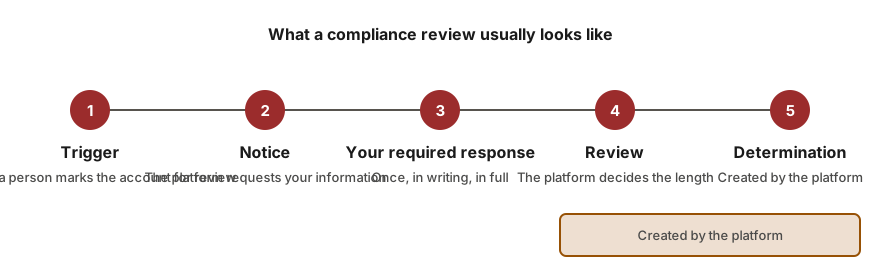
In most cases a block notice contains a request, even if the wording is poor. Identify what is being asked, the deadline given and the channel you must use. Proof of address and proof of source of funds are two different requests.
Should the notice be unclear, respond with a single precise question: which document or which information will end the review. Keep the response in writing.
What to do during the first days
Please provide one complete response rather than multiple partial submissions, as fragmented replies tend to slow the review process.
- Avoid attempts to create additional accounts or relocate the balance to other locations before the review is completed.
- You should gather all documentation regarding the account funding method, including exchange exports, bank statements, and purchase records.
- Verify that the name and residential address recorded within the application precisely match the details on your official identification.
- Respond a single time via the official channel and retain the ticket number.
- Do not provide your seed phrase, private keys, card PIN, or password to any individual who offers to provide assistance with the block.
Status Change from a Block to Account Closure
Some issuers opt for account closure rather than merely lifting the existing restriction on your assets. They may then return the balance or hold it pending the conclusion of the review.
If the provider remains silent for an extensive period, structured support assists with organizing documents, drafting responses, and defining provider demands. The issuer ultimately decides, and no forced release can be achieved.
Frequently asked questions
Why did my crypto card get blocked without notice?
Automated rules frequently act before any message reaches you. A deposit, a merchant category or a change of location may have triggered the flag, and the account stays on hold until a reviewer examines it. In practice, a written notice can follow.
Is the money on a frozen card still available to spend?
In most cases, no. As a rule, a block applies to both spending and withdrawals at the same time. You may submit a written request asking whether the balance can be transferred to a verified bank account or wallet while the review is in progress.
Does applying for a fresh card through a different provider solve anything?
As a rule, responding to the initial inquiry is the correct procedure. Moving funds promptly may be interpreted as an attempt to evade the review, and in practice this can delay the resolution. You should address the provider's request in writing first and determine the disposition of the funds only after the account is restored.
Which paperwork do card issuers typically request when they review your account?
Providers usually ask for a government identity document, recent proof of address, bank statements, and documentation showing the origin of the crypto, for example account records from an exchange or receipts from purchases. In practice, the precise list of documents varies by provider and depends on which flag triggered the review.
How we can help
- Blocks on crypto cards and payment accounts. Card, neobank or processor account blocked: identify the trigger, document it, appeal.
- Source of funds and wealth documentation packs. Build a clear source of funds and source of wealth pack for exchanges, banks and processors.
- Help with closing your account and the offboarding process. Closed account or offboarding notice, funds still inside: written requests and escalation.
- Diagnosing who froze your crypto. Establish who froze your funds and which next step is realistic.
The content on this page is general in nature and is not legal advice.